
TL;DR:
- Treatment-resistant depression involves persistent symptoms after two adequate antidepressant trials and requires personalized, multimodal strategies. Clinicians must rule out pseudoresistance by thoroughly assessing medication adherence and comorbidities before escalating treatment. Combining rapid-acting therapies, targeted pharmacological augmentation, and early integration of non-pharmacological approaches improves functional recovery.
Treatment-resistant depression (TRD) is defined as the failure to achieve meaningful symptom improvement after two adequate antidepressant trials, each dosed and timed properly. Building a treatment-resistant depression plan means creating a personalized, multimodal strategy that addresses both symptoms and the functional impairments that depression leaves behind. The standard clinical threshold for TRD is less than 25% symptom improvement over 6–8 weeks of adequate treatment. That benchmark matters because it separates true resistance from undertreated depression. A well-built plan goes beyond medication trials. It targets functional recovery across work, relationships, and daily life, using the Sheehan Disability Scale and other tools to measure real-world progress.
What prerequisites and assessments are essential before building a TRD plan?
The single most common error in TRD care is skipping the diagnostic groundwork. Before escalating to advanced treatments, every plan must rule out pseudoresistance. Pseudoresistance occurs when untreated comorbidities or suboptimal dosing mimic true treatment failure. Conditions like sleep apnea, hypothyroidism, and metabolic disorders can block antidepressant response entirely. Addressing them first can produce dramatic improvements without adding a single new medication.
A rigorous audit of prior treatments is the starting point. This means reviewing exact doses, duration of each trial, and whether the patient actually took the medication as prescribed. Patients often underreport missed doses, and clinicians often underestimate how frequently subtherapeutic dosing explains apparent resistance. A thorough treatment history audit is not optional. It is the foundation of an accurate TRD diagnosis.
The table below summarizes the core assessments every TRD plan should include before treatment escalation.
| Assessment | Purpose |
|---|---|
| Medication history audit | Verify dose, duration, and adherence for all prior trials |
| Comorbidity screening | Rule out sleep apnea, thyroid dysfunction, and metabolic disorders |
| Psychiatric reassessment | Confirm diagnosis; screen for bipolar disorder, ADHD, and PTSD |
| Standardized symptom scales | Quantify severity using tools like the PHQ-9 or MADRS |
| Functional assessment | Measure occupational, social, and family impairment via Sheehan Disability Scale |
- Confirm each prior antidepressant trial lasted at least 6–8 weeks at an adequate dose.
- Screen for bipolar spectrum disorders, which require a different treatment approach entirely.
- Assess sleep quality independently. Poor sleep alone can sustain depressive symptoms.
- Review all concurrent medications for interactions that reduce antidepressant efficacy.
Pro Tip: Ask your prescriber to document each prior trial in writing, including the exact dose and duration. This record becomes the foundation of your TRD plan and prevents repeating failed strategies.
What pharmacological strategies should a TRD management plan include?
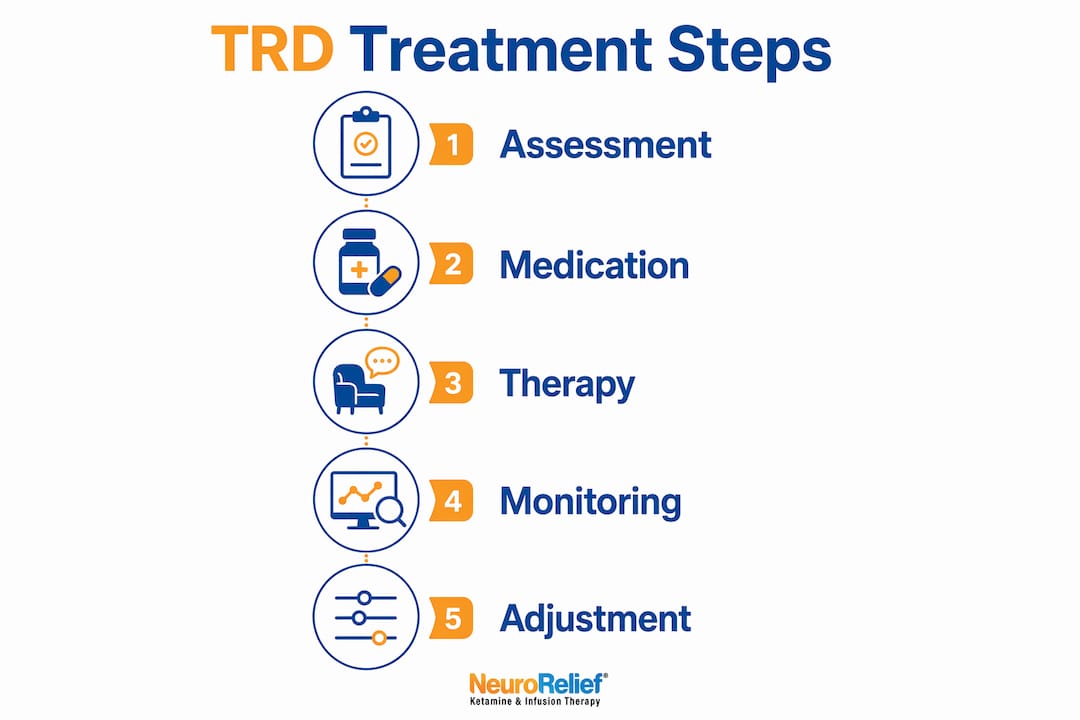
After two antidepressant trials fail, the evidence points clearly toward augmentation and advanced interventions. Augmentation with atypical antipsychotics or lithium is a well-established next step. Agents like aripiprazole and brexpiprazole have the strongest evidence base among atypical antipsychotics for TRD augmentation. Lithium remains a proven option, particularly for patients with recurrent depressive episodes. Thyroid hormone (T3) augmentation is a lower-profile but clinically supported strategy, especially when thyroid function sits in the low-normal range.

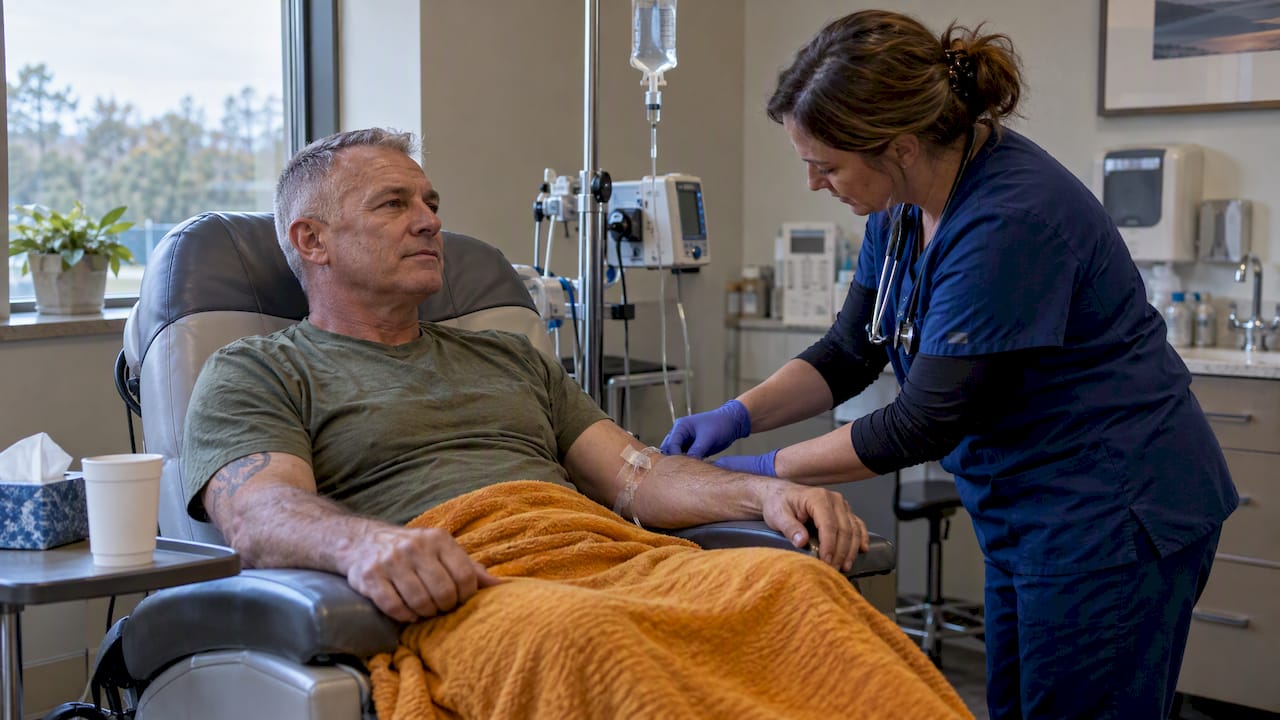
Rapid-acting therapies represent a major shift in what TRD care can offer. Ketamine and esketamine work through NMDA receptor antagonism, restoring synaptic connectivity and BDNF signaling in ways that traditional antidepressants do not. The practical result is striking. Where SSRIs and SNRIs may take 4–8 weeks to show effect, ketamine may produce a response within hours to days. For patients who have waited years for relief, that speed matters enormously. Neuroreliefketamine provides medically supervised IV ketamine infusion therapy for appropriate candidates in Los Angeles, with individualized dosing under the care of Dr. Austin Harris, a board-certified cardiothoracic anesthesiologist.
Transcranial magnetic stimulation (TMS) is another non-invasive option with a growing evidence base. TMS uses magnetic pulses to stimulate underactive brain regions associated with mood regulation. It carries no systemic side effects and is approved by the FDA for depression. For the most severe and refractory cases, electroconvulsive therapy (ECT) remains the gold standard for TRD, offering robust efficacy when multiple other treatments have failed.
- Confirm two adequate antidepressant trials have genuinely failed before escalating.
- Add an augmentation agent such as aripiprazole, brexpiprazole, or lithium to the current regimen.
- Evaluate candidacy for ketamine or esketamine therapy based on symptom severity and prior treatment history.
- Consider TMS for patients who prefer a non-pharmacological advanced option.
- Reserve ECT for severe, refractory cases where speed of response is critical.
Pro Tip: Ketamine therapy works best when combined with psychotherapy. The neuroplasticity window that ketamine may open is an opportunity to build new thought patterns. Plan for therapy sessions in the days following an infusion.
How can non-pharmacological therapies improve outcomes in TRD?
Non-pharmacological therapies are not a last resort. They are a core component of any well-designed TRD plan, and the evidence supports integrating them early. Early use of psychotherapies like CBASP and mindfulness-based cognitive therapy improves long-term outcomes and reduces reliance on pharmacotherapy alone. CBASP, or Cognitive Behavioral Analysis System of Psychotherapy, was developed specifically for chronic depression. It focuses on the connection between interpersonal behavior and depressive symptoms, making it particularly well-suited for patients with long-standing TRD.
Mindfulness-based cognitive therapy (MBCT) teaches patients to observe their thoughts without being controlled by them. This skill is especially valuable for TRD patients who have spent years in cycles of rumination and hopelessness. Lifestyle modifications compound the benefit of both pharmacological and psychological treatments.
- Aerobic exercise practiced consistently reduces depressive symptoms through multiple neurobiological pathways.
- Sleep hygiene interventions, including consistent sleep and wake times, reduce the circadian disruption that worsens depression.
- Stress reduction practices such as mindfulness meditation, progressive muscle relaxation, and breathwork lower cortisol and support mood stability.
- Social connection, even in small doses, counteracts the withdrawal that depression promotes.
Integrated, collaborative care models that bring together psychiatrists, therapists, primary care physicians, and social workers address the full biopsychosocial picture of TRD. These models consistently outperform single-provider care in long-term outcomes. Neuroreliefketamine supports this approach by encouraging patients to combine mindfulness and therapy with ketamine treatment for better and more durable results.
Pro Tip: Start psychotherapy before or during pharmacological treatment, not after. Waiting until medications “work” delays the psychological skills that make recovery stick.
How do you personalize and monitor a TRD plan for real recovery?
Personalizing a TRD plan means matching treatments to the specific symptom clusters that dominate a patient’s experience. A domain-based approach tailors interventions to signature profiles like anhedonia, cognitive slowing, anxiety, or circadian disruption. This is now recognized as best practice for individualized TRD care. A patient whose primary symptom is anhedonia responds differently than one whose dominant feature is cognitive impairment. Treating both with the same protocol produces predictably weak results.
Functional recovery is the true goal, not just symptom reduction. The Sheehan Disability Scale measures impairment across occupational, social, and family domains. A score of 12 or below indicates treatment response. A score of 6 or below indicates remission. These benchmarks give both patient and clinician a concrete target beyond “feeling less bad.” Patients with TRD often normalize low-level suffering over time. Setting personal functional recovery goals counteracts that normalization and keeps the plan focused on quality of life.
The table below shows how domain-based treatment matching works in practice.
| Dominant symptom domain | Preferred treatment approach |
|---|---|
| Anhedonia | Ketamine therapy, dopaminergic augmentation |
| Cognitive slowing | Stimulant augmentation, TMS targeting prefrontal cortex |
| Anxiety and hyperarousal | MBCT, low-dose augmentation, sleep intervention |
| Circadian disruption | Light therapy, sleep hygiene protocol, melatonin |
| Interpersonal dysfunction | CBASP, group therapy, social rhythm therapy |
- Reassess the plan every 4–6 weeks using standardized scales, not just clinical impression.
- When progress plateaus, revisit the pseudoresistance checklist before adding new medications.
- Adjust goals as function improves. Early goals may focus on returning to work. Later goals may target social engagement and personal meaning.
- Document side effects systematically. Tolerability drives adherence, and adherence drives outcomes.
Pro Tip: Write your functional goals down in specific, measurable terms. “Return to cooking dinner three times a week” is more useful than “feel better.” Concrete goals make progress visible and keep motivation alive during slow periods.
Key Takeaways
A successful TRD plan combines pseudoresistance evaluation, domain-based treatment matching, rapid-acting therapies, and integrated non-pharmacological care to achieve functional recovery, not just symptom reduction.
| Point | Details |
|---|---|
| Rule out pseudoresistance first | Verify dose, duration, and adherence before escalating to advanced treatments. |
| Use functional goals, not just symptom scores | Sheehan Disability Scale scores of 6 or below indicate true remission across life domains. |
| Match treatments to symptom domains | Anhedonia, cognitive slowing, and anxiety each respond to different interventions. |
| Integrate non-pharmacological therapies early | CBASP, MBCT, exercise, and sleep hygiene improve outcomes when added from the start. |
| Consider rapid-acting options for severe TRD | Ketamine and esketamine may produce response within hours to days for appropriate candidates. |
What I’ve learned from treating patients who felt out of options
The patients who arrive at our clinic in Los Angeles have often tried four, five, or six medications. They are not treatment failures. They are patients who were failed by a system that kept repeating the same approach and expecting different results.
The most important clinical lesson I have learned is that pseudoresistance is far more common than true TRD. Before I consider any advanced intervention, I go back to the basics. Was the dose adequate? Was the trial long enough? Was there an untreated thyroid issue or sleep disorder quietly undermining every medication? Catching that detail changes everything. It saves patients from unnecessary procedures and restores their confidence that treatment can work.
The second lesson is about goals. Patients with long-standing depression often tell me they just want to “feel normal.” When I ask what normal looks like for them, they struggle to answer. Depression has been their normal for so long that they have stopped imagining anything better. I ask them to describe one specific thing they want to be able to do again. That answer becomes the anchor of their plan.
Ketamine therapy, when appropriate, can create a real opening. The rapid shift in mood and perspective that some patients experience gives them a window to engage with therapy and lifestyle changes in a way they could not before. That window is not the cure. What patients do with it determines the outcome. The plan around the treatment matters as much as the treatment itself.
Overcoming treatment-resistant depression is not a single event. It is a process of building, adjusting, and rebuilding a plan that fits the person in front of you.
— Austin Harris, MD
Neuroreliefketamine’s approach to your TRD plan
Patients across Los Angeles, from Sherman Oaks to Beverly Hills to Santa Monica, come to Neuroreliefketamine after years of trying treatments that did not deliver lasting relief.

Neuroreliefketamine offers medically supervised IV ketamine infusion therapy led by Dr. Austin Harris, whose background in cardiothoracic anesthesiology brings a level of clinical precision that TRD care demands. Every patient receives an individualized evaluation that reviews prior treatment history, symptom domains, and functional goals before any infusion begins. Learn more about what TRD treatment involves and whether ketamine therapy may be a fit for your situation. To take the next step, contact the Neuroreliefketamine team and schedule a consultation.
FAQ
What qualifies as treatment-resistant depression?
TRD is defined as less than 25% symptom improvement after two adequate antidepressant trials, each lasting 6–8 weeks at a proper dose. Pseudoresistance from undertreated comorbidities must be ruled out first.
How does ketamine differ from standard antidepressants?
Ketamine acts on the glutamate system through NMDA receptor antagonism, which may restore synaptic connectivity within hours to days. Standard antidepressants target serotonin or norepinephrine pathways and typically require weeks to show effect.
What is the Sheehan Disability Scale used for in TRD?
The Sheehan Disability Scale measures functional impairment across work, social life, and family domains. A score of 6 or below indicates remission, making it a practical tool for tracking real-world recovery beyond symptom scores alone.
Can therapy alone treat treatment-resistant depression?
Therapy alone is rarely sufficient for true TRD, but psychotherapies like CBASP and mindfulness-based cognitive therapy significantly improve outcomes when combined with pharmacological or advanced treatments from the start of care.
How often should a TRD plan be reassessed?
A TRD plan should be formally reassessed every 4–6 weeks using standardized scales. When progress plateaus, the first step is revisiting the pseudoresistance checklist before adding new medications or procedures.