
TL;DR:
- Ketamine reduces cravings by modulating NMDA receptors in the glutamate system, restoring brain balance. It significantly increases abstinence probability and helps rewiring neural circuits related to addiction. When combined with therapy, ketamine offers a promising approach for long-term addiction recovery.
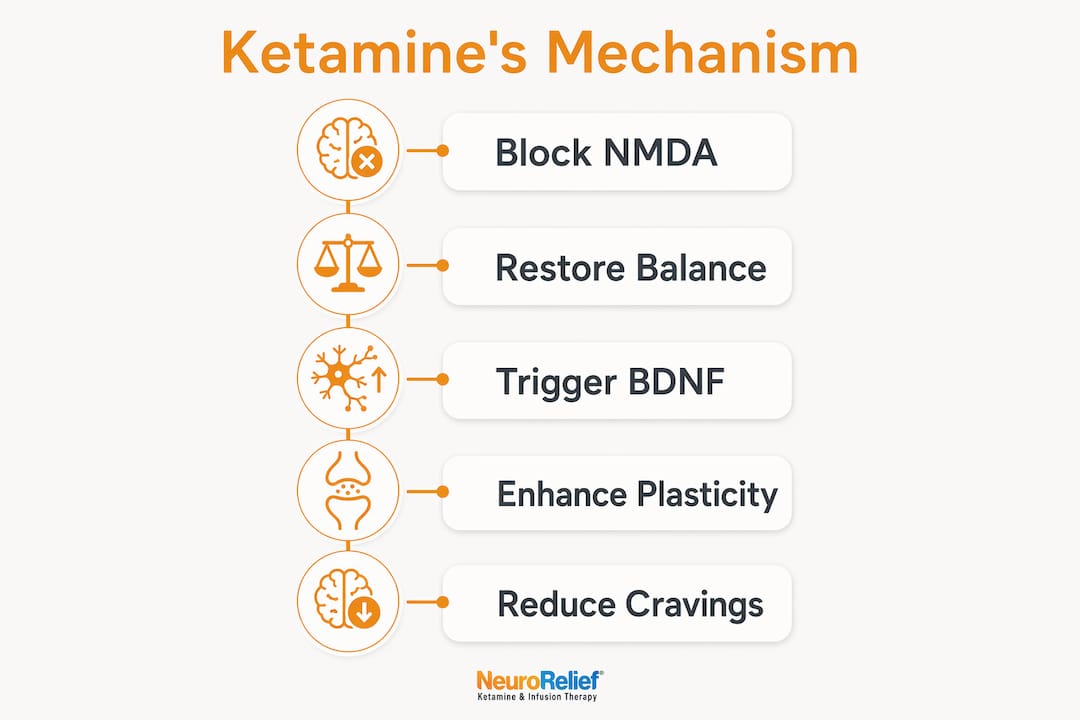
Ketamine reduces cravings by targeting the brain’s glutamate system, specifically NMDA receptors, to restore chemical balance disrupted by addiction. This mechanism, known clinically as NMDA receptor modulation, sets ketamine apart from traditional addiction treatments that focus on dopamine or serotonin pathways. A 2026 meta-analysis of 11 randomized controlled trials found statistically significant craving reduction with a Hedges’ g of 0.34 and nearly doubled abstinence probability. That finding means ketamine is not just reducing discomfort. It is measurably changing the brain’s relationship with addictive substances. For patients who have tried standard treatments without success, understanding how ketamine reduces cravings explained through neuroscience gives a clearer picture of why this therapy may offer a different path forward.
How does ketamine reduce cravings? The neurobiological mechanism
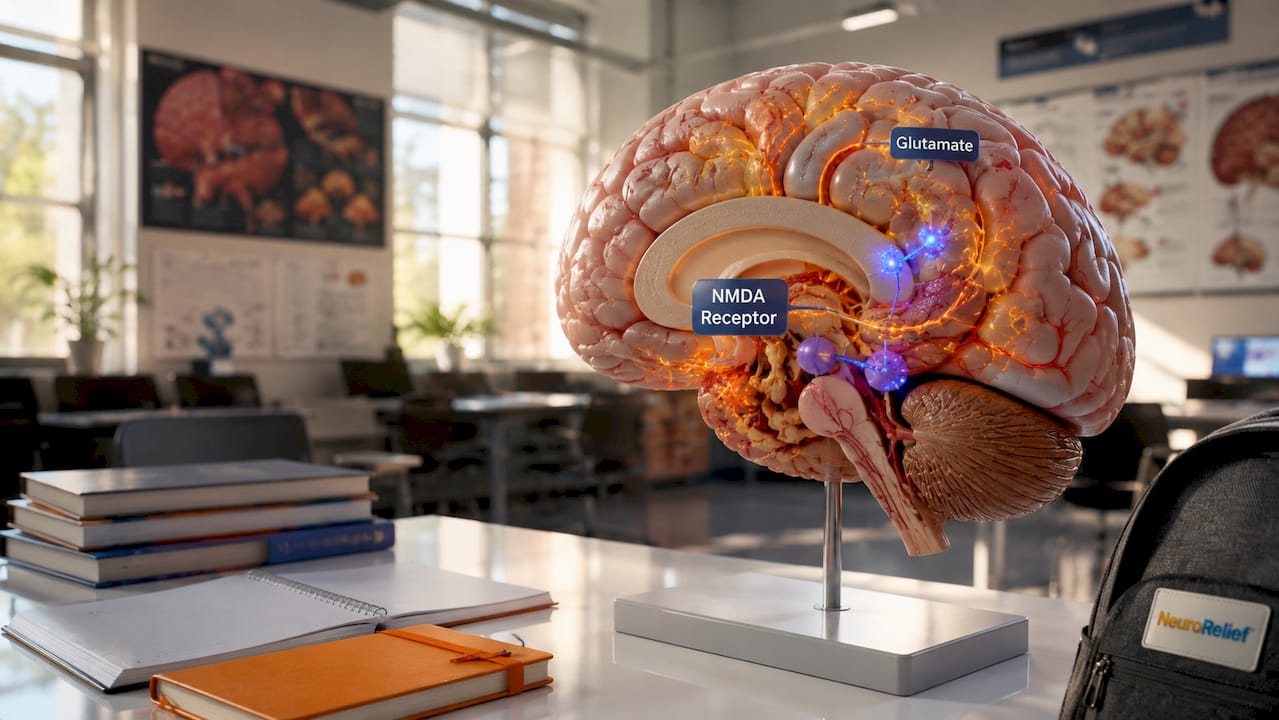
Ketamine’s primary mechanism is NMDA receptor modulation in the glutamate system, which restores homeostasis that addiction has dysregulated. Glutamate is the brain’s main excitatory neurotransmitter. In addiction, glutamate signaling becomes unbalanced, driving compulsive craving cycles that feel impossible to break.
When glutamate homeostasis breaks down, the brain’s reward circuits lock into patterns that treat substance use as a survival priority. Ketamine interrupts this loop by blocking overactive NMDA receptors, which quiets the runaway signaling that fuels cravings. The result is a measurable drop in craving intensity for many patients.
Ketamine also triggers neuroplasticity and BDNF increase, enabling the brain to rewire addiction-related neural circuits and reduce compulsive behaviors. BDNF, or brain-derived neurotrophic factor, acts like fertilizer for neurons. Higher BDNF levels support the growth of new synaptic connections, which means the brain can physically build new pathways away from addictive patterns.
The reward circuit changes are particularly significant. Addiction hijacks the brain’s dopamine reward system, but that hijacking depends on glutamate signaling to sustain itself. By restoring glutamate balance, ketamine weakens the reward circuit’s grip on behavior. Patients often describe this as a sense of distance from their cravings, as if the urge is still present but no longer in control.
- NMDA receptor blockade quiets overactive glutamate signaling that drives craving cycles.
- Glutamate homeostasis restoration reduces the chemical imbalance that addiction creates.
- BDNF increase supports synaptogenesis, allowing the brain to form healthier neural patterns.
- Reward circuit modulation weakens the compulsive pull of addictive substances.
Pro Tip: Ask your treatment provider specifically about BDNF and neuroplasticity timelines. Understanding that brain rewiring takes weeks, not hours, helps set realistic expectations for how long craving relief may build after infusions.
What does the research say about ketamine’s effectiveness for cravings?
The clinical evidence for ketamine’s effect on addiction is growing fast. A 2026 systematic review and meta-analysis covering 11 randomized controlled trials with 389 participants found that ketamine nearly doubled abstinence probability, with a risk ratio of 1.95. That is not a marginal improvement. It represents a meaningful shift in outcomes for patients who have struggled to stay abstinent through other means.
Research on tobacco use disorder adds an important nuance. A 2026 randomized crossover study found that ketamine reduced qualitative craving intensity and intrusive thoughts for several days after infusion, even when immediate quantitative craving scores showed minimal change. This tells clinicians something important: the subjective experience of craving, the intrusive thoughts and emotional pull, may improve before standardized rating scales capture it.
| Research Area | Key Finding |
|---|---|
| Craving reduction (meta-analysis) | Hedges’ g = 0.34, statistically significant across 11 RCTs |
| Abstinence probability | Risk ratio of 1.95, nearly doubling abstinence likelihood |
| Tobacco use disorder | Reduced intrusive craving thoughts for several days post-infusion |
| Comorbid MDD and alcohol use disorder | Decreased cravings in 67% of studies for dual-target population |
“Ketamine shows dual-target potential for patients with comorbid major depressive disorder and alcohol use disorder, simultaneously reducing both cravings and depressive symptoms. This positions ketamine as a promising option for patients whose addiction and mental health conditions are deeply intertwined.”
The dual-target finding from ASAM 2026 conference data is particularly relevant for patients in Los Angeles and across Southern California who carry both a substance use disorder and a mood disorder. Depression and addiction frequently co-occur, and treating only one often leaves the other untreated. Ketamine’s ability to address both simultaneously changes the clinical calculus for these patients.
Current research does have limits. Most trials are small, and long-term follow-up data beyond six months remains limited. Ketamine is not yet a first-line addiction treatment, and individual responses vary. The evidence supports its use as a serious clinical option, not a guaranteed solution.
How is ketamine therapy integrated into comprehensive addiction treatment?
Ketamine is not a standalone cure. Clinical experts stress that optimal outcomes occur when ketamine is combined with cognitive behavioral therapy, motivational interviewing, and relapse prevention programs. The biological window that ketamine opens is only as useful as what patients do inside it.
Think of ketamine as creating a period of cognitive flexibility. The brain becomes more receptive to new patterns, new perspectives, and new habits. Psychotherapy during this window can take root in ways it often cannot when the brain is locked in rigid addiction cycles. Without that therapeutic work, the biological effect fades and old patterns return.
The clinical setting itself matters. Infusions can trigger intense emotional states, and professional guidance during and after treatment is not optional. It is a safety requirement and a clinical necessity for maximizing benefit. Neuroreliefketamine provides medically supervised infusion therapy in a monitored environment specifically designed to support patients through these experiences.
A well-structured ketamine treatment plan for addiction typically includes:
- Medical screening and evaluation to confirm candidacy and identify any contraindications.
- A series of IV ketamine infusions administered over several weeks, with dosing individualized to the patient.
- Concurrent psychotherapy, such as CBT or motivational interviewing, scheduled around infusion sessions to capitalize on the neuroplasticity window.
- Relapse prevention planning integrated throughout the treatment series, not added as an afterthought.
- Aftercare and maintenance to sustain gains, including follow-up infusions if clinically indicated and ongoing therapy.
Pro Tip: Schedule your therapy sessions within 24–72 hours after a ketamine infusion when possible. The neuroplasticity window is most open during this period, and psychotherapy tends to land more effectively when the brain is in a more flexible state.
Sustained programs of 60–90 days show stronger outcomes than brief interventions. Ketamine therapy should be tailored to individual severity and any co-occurring conditions, not applied as a uniform protocol. Patients with comorbid depression, PTSD, or anxiety may need a treatment plan that addresses all conditions in parallel.
What should patients know before starting ketamine treatment for cravings?
Patients starting ketamine treatment for craving reduction benefit from clear, realistic expectations. The timeline, the process, and the aftercare requirements all shape whether treatment succeeds.
Many patients experience significant craving reduction within 24–48 hours after their first infusion. That early relief is real, but it is not the full picture. The complete benefit builds across a series of infusions, and the gains deepen when paired with consistent psychological support.
- Session frequency: A standard initial series typically involves multiple infusions over two to three weeks, though the exact schedule depends on the patient’s condition and clinical response.
- Craving relief timeline: Early reduction may appear within 24–48 hours. Sustained reduction builds over the full treatment series and the weeks following.
- Psychological support: Therapy is not optional. Craving reduction without behavioral change does not produce lasting recovery. Patients who engage actively in ketamine-assisted psychotherapy consistently report stronger outcomes.
- Aftercare planning: Cravings and mood dysregulation can persist after withdrawal, requiring sustained psychological care beyond the infusion series.
- Side effects during infusions: Dissociation, altered perception, and emotional intensity are common during sessions. These effects are temporary and managed in a supervised clinical setting.
- Individual variation: Not every patient responds the same way. Some patients notice dramatic early improvement. Others see gradual change. A small number may not respond significantly, which is why ongoing evaluation matters.
Patients in the Los Angeles area, including those traveling from Beverly Hills, Santa Monica, Sherman Oaks, or Pasadena, should plan for transportation after each session. Driving after a ketamine infusion is not safe, and having a support person available improves both safety and the recovery experience.
Key Takeaways
Ketamine reduces cravings by restoring glutamate balance in the brain, triggering neuroplasticity, and nearly doubling abstinence probability when combined with structured psychotherapy.
| Point | Details |
|---|---|
| NMDA receptor modulation | Ketamine blocks overactive glutamate receptors, directly reducing the chemical signals that drive cravings. |
| Neuroplasticity window | Ketamine triggers BDNF increase and synaptogenesis, giving the brain a period of heightened flexibility for rewiring. |
| Clinical evidence | A 2026 meta-analysis of 11 RCTs found nearly doubled abstinence probability and significant craving reduction. |
| Therapy integration | Ketamine works best as an adjunct to CBT and relapse prevention, not as a standalone treatment. |
| Realistic expectations | Craving relief may begin within 24–48 hours, but sustained recovery requires ongoing psychological support and aftercare. |
What I’ve learned about ketamine and cravings after years in the infusion room
Patients often arrive expecting ketamine to remove their cravings the way surgery removes a tumor. That expectation is understandable, but it misses what the treatment actually does. Ketamine creates a window. What happens inside that window determines whether recovery takes hold.
The patients I see make the most progress are the ones who treat the post-infusion period as an active opportunity, not a passive recovery. They show up to therapy. They practice the skills their counselors teach. They lean into the discomfort of examining their patterns while their brain is in a more receptive state. The biology supports the work. It does not replace it.
I also want to address a misconception I hear often: that ketamine is too risky or too experimental for serious addiction treatment. Ketamine is an FDA-approved medication with decades of use in medical settings. The off-label application to addiction is supported by a growing body of clinical research, including the 2026 meta-analysis data. The risk profile is manageable when treatment happens in a properly supervised clinical environment with individualized dosing and monitoring.
What concerns me more than the medication itself is the growing number of patients accessing ketamine outside of structured medical programs. The clinical setting is not a luxury. It is where the safety protocols, the therapeutic integration, and the aftercare planning happen. Ketamine without those elements is a missed opportunity at best and a safety risk at worst.
My honest recommendation: if you are considering ketamine for craving reduction, find a physician-led program that treats the infusion as one part of a larger plan. The aftercare and next steps matter as much as the infusion itself.
— Dr. Austin Harris, NeuroRelief Ketamine
Ketamine treatment for cravings at Neuroreliefketamine in Los Angeles
Neuroreliefketamine offers physician-led IV ketamine infusion therapy for patients in Los Angeles and throughout Southern California who are working through addiction and craving-related challenges. Dr. Austin Harris, a board-certified cardiothoracic anesthesiologist trained at UC Irvine and Keck Hospital of USC, leads every treatment plan with individualized dosing, careful monitoring, and a focus on integrating ketamine with psychotherapy for lasting results.
The clinic serves patients from Sherman Oaks, Beverly Hills, Santa Monica, Pasadena, Burbank, and across the greater Los Angeles area. If you have tried other approaches without finding enough relief, ketamine treatment options at Neuroreliefketamine may offer a medically grounded next step. Contact the clinic to schedule a consultation and learn whether ketamine infusion therapy is appropriate for your situation.
FAQ
How does ketamine reduce cravings in the brain?
Ketamine blocks overactive NMDA receptors in the glutamate system, restoring chemical balance that addiction disrupts. This reduces the intensity of craving signals and supports neuroplasticity, allowing the brain to build new, healthier patterns.
How quickly does ketamine reduce cravings?
Many patients report noticeable craving reduction within 24–48 hours after their first infusion. Full benefit typically builds across a series of infusions combined with ongoing psychotherapy.
Does ketamine work for all types of addiction?
Research shows craving reduction across multiple substance use disorders, including alcohol and tobacco. A 2026 meta-analysis found nearly doubled abstinence probability, though individual results vary and medical evaluation is required.
Is ketamine safe for addiction treatment?
Ketamine is an FDA-approved medication with a well-established safety profile when administered in a supervised clinical setting. Proper screening, individualized dosing, and medical monitoring are the key factors that determine safety.
Does ketamine therapy replace other addiction treatments?
Ketamine works best as an adjunct to evidence-based therapies like CBT and motivational interviewing, not as a replacement. Clinical experts consistently find that combining ketamine with structured psychotherapy produces the strongest and most lasting outcomes.