
Bottom line: ketamine is not a guideline-backed, first-line PTSD treatment in VA/DoD guidance, but it may ease depressive symptoms and suicidal thinking and is authorized under VA protocols for treatment-resistant depression. If this sounds like your situation, bring your treatment history and recent mood-scale scores to a VA mental health evaluation, or ask about community care referrals and clinical trials.
TL;DR:
- Ketamine may provide rapid mood relief within 24 hours for PTSD, but its effects tend to be short-lived and inconsistent across studies.
- VA authorization covers IV ketamine mainly for treatment-resistant depression and severe suicidal ideation, not for PTSD core symptoms alone.
- Veterans should undergo thorough screening for cardiovascular issues, pregnancy, psychosis, or substance misuse before starting ketamine treatment.
- Long-term safety data for repeated ketamine use are limited, making it an adjunct rather than a standalone cure for PTSD.
- The best approach involves stabilization with ketamine to enable engagement in trauma-focused therapy, which remains the primary recommended treatment for PTSD.
Table of Contents
- What the research says about ketamine and PTSD in veterans
- VA policy and clinical criteria for IV ketamine authorization
- How to pursue ketamine treatment through VA or community care
- Safety, side effects, and monitoring during ketamine treatment
- Where ketamine fits next to trauma-focused therapy
- What a physician-led ketamine clinic actually looks like
- Intranasal, oral, and other ketamine delivery methods
- Stigma and ethical questions veterans face with ketamine
- What ketamine costs outside the VA system
- Long-term effectiveness and keeping gains after treatment
- A note to veterans weighing hope against caution
- How NeuroRelief can help veterans evaluate ketamine treatment
- Sources
- FAQ
What the research says about ketamine and PTSD in veterans
The clearest finding across the research is a contrast: ketamine often works fast on mood, but its effect on core PTSD symptoms is far less settled. A 2024 systematic review and meta-analysis found that ketamine was associated with symptom improvements noticeable within 24 hours of the first infusion and again at the end of treatment, but the underlying trials varied widely in design, and the benefits were often short-lived.
That inconsistency matters more for veterans specifically. A separate systematic review covering ketamine’s role in chronic pain, depression, and PTSD points to multi-center trials in military and veteran samples where repeated-dose ketamine did not consistently beat placebo on PTSD outcome measures, even though it still produced antidepressant effects. In other words, the mood lift is more reliable than the trauma-symptom relief.
A few methodological problems explain why the evidence stays murky:
- Small samples. Many ketamine-PTSD trials enroll a few dozen participants, which limits how confidently results generalize.
- Blinding is hard. Ketamine’s dissociative effects make it difficult to disguise from a true placebo, which can inflate perceived benefit.
- Follow-up windows are short. Most trials track outcomes for weeks, not months, so durability beyond the acute window is largely unknown.
- Civilian-to-veteran gaps. Trauma exposure patterns, comorbid conditions, and treatment history in military populations differ from civilian samples used in many early ketamine studies.
A 2024 systematic review and meta-analysis found that ketamine produced measurable symptom improvement within 24 hours of infusion in PTSD patients, though effects varied across trials and durability remained limited. That single data point captures both the appeal and the caution sign: fast relief, uncertain staying power.
For a veteran weighing options today, the practical takeaway is this: ketamine may be useful as a short-term stabilization tool, particularly when depression or suicidal thinking is severe enough to block progress in trauma-focused therapy. It is not yet positioned, by the evidence or by VA policy, as a stand-alone PTSD cure.
VA policy and clinical criteria for IV ketamine authorization
The VA does not authorize IV ketamine as a general PTSD treatment. Clinical determination guidance from the VHA Office of Integrated Veteran Care frames IV ketamine as medically necessary specifically for treatment-resistant depression or severe suicidal ideation, not for PTSD symptom clusters like hypervigilance, intrusive memories, or avoidance on their own.
Treatment-resistant depression, in this context, generally means a patient has already tried and not adequately responded to standard options such as SSRIs, SNRIs, or structured psychotherapy. The same VA guidance lays out exclusion criteria that determine who is not a candidate:
- Uncontrolled cardiovascular disease, since ketamine can raise blood pressure and heart rate during infusion.
- Pregnancy, due to insufficient safety data for fetal exposure.
- Active psychotic disorders, because dissociative effects can worsen psychotic symptoms.
- Unmanaged substance use disorder, which raises misuse and safety concerns during and after treatment.
VA selection guidance also calls for assessing substance use history and psychiatric comorbidities before authorizing treatment, which typically includes urine drug screening as part of the workup.
Dosing and monitoring follow a structured cadence rather than an open-ended schedule:
| Phase | Typical pattern | Monitoring focus |
|---|---|---|
| Induction | Multiple infusions over 2 to 3 weeks | Vital signs, PHQ-9 tracking, dissociation symptoms |
| Maintenance | Spaced-out infusions as needed | PHQ-9, C-SSRS suicide risk checks, cognitive status |
| Reassessment | Periodic clinical review | Treatment response, continued medical necessity |
Veterans can access this care through two main channels: VA medical centers that run in-house ketamine programs, or a referral through the Veterans Community Care Program when VA capacity or location makes in-house treatment impractical. Which path applies depends on local VA facility resources and the veteran’s clinical picture, not on personal preference alone.
How to pursue ketamine treatment through VA or community care
Getting evaluated for ketamine starts with a conversation, not a request. Here is a practical sequence:
- Raise it with your VA mental health provider. Ask specifically whether your depression or suicidal ideation meets criteria for treatment-resistant depression under VA policy.
- Prepare your documentation. Gather a list of medications tried, psychotherapy history (including any CPT, PE, or EMDR courses), and your most recent PHQ-9, MADRS, or PCL-5 scores if you have them.
- Ask directly about evaluation for TRD or severe suicidal ideation. This is the actual clinical gateway, so naming it precisely helps the conversation move faster.
- Request a Community Care referral if your facility lacks an in-house program. This is a standard, not exceptional, request when local VA ketamine capacity is limited.
Expect the evaluation itself to include a psychiatric history review, screening for the exclusion criteria above, and probably repeat mood-scale testing to document baseline severity.
Pro Tip: Write down your PHQ-9 or PCL-5 scores from your last few appointments before your visit. A documented trend carries more weight than a verbal description of “feeling worse.”
If VA or community care options are not accessible, some veterans look into private ketamine clinics or clinical trials. Before committing, confirm the clinic has physician-level medical oversight and ask how it coordinates care with your existing VA or community providers so your records stay connected.
Safety, side effects, and monitoring during ketamine treatment
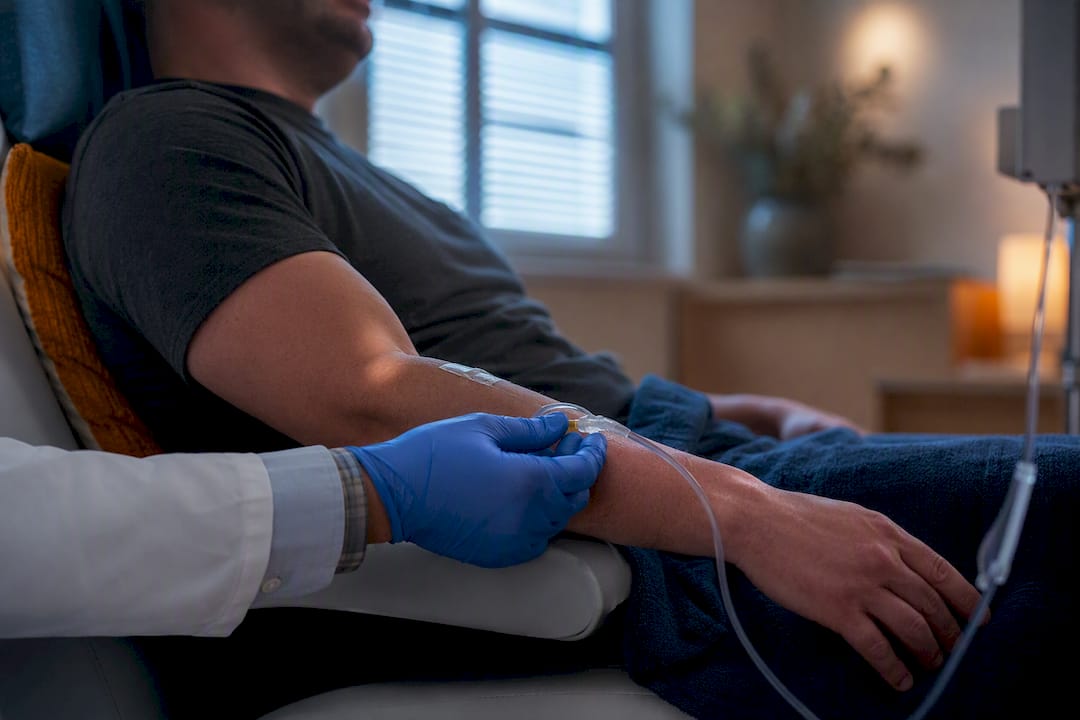
Ketamine infusions typically produce short-lived side effects that resolve within the appointment window. Clinical summaries and VA documents describe transient dissociation, dizziness, nausea, and temporary increases in blood pressure as the most common effects during an infusion, with serious events uncommon when proper monitoring is in place.
Rarer risks still require screening before treatment begins:
- Cardiac strain, which is why blood pressure and heart rate are checked before and during infusion.
- Pregnancy risk, addressed through pre-treatment screening.
- Substance use relapse or misuse potential, addressed through urine drug screening and sobriety assessment as part of candidacy review.
VA guidance specifies exclusion criteria along with urine drug screening and monitoring requirements to manage substance use disorder risk during ketamine treatment. That screening step is not a formality. Ketamine has misuse potential, and clinics that take it seriously build repeat screening into the maintenance phase, not just the intake visit.
Long-term safety data remain limited. Most trials track patients for weeks, not years, so neither the VA nor the broader research base can yet offer a firm answer on what repeated ketamine use over several years means for cognition or dependence risk. Ongoing PHQ-9 and C-SSRS monitoring during both induction and maintenance phases is the standard safeguard in the meantime.
Where ketamine fits next to trauma-focused therapy
The VA/DoD 2023 Clinical Practice Guideline recommends trauma-focused psychotherapies, Cognitive Processing Therapy, Prolonged Exposure, and EMDR, as the first-line treatment for PTSD, and it rated ketamine as weak against use specifically for PTSD given the limited evidence behind it. That is a meaningful distinction: the guideline is not neutral on ketamine for PTSD, it leans against it as a primary treatment.
Where ketamine may still have a role is as a stabilization bridge rather than a substitute:
- Severe comorbid depression that is actively blocking a veteran’s ability to engage with trauma-focused therapy.
- Imminent suicide risk where rapid symptom relief could create a safer window for starting or continuing therapy.
- Inability to tolerate exposure-based work until mood and energy improve enough to participate meaningfully.
For most veterans, the sequence that fits the evidence best is stabilization first, then trauma-focused therapy. Some current trials are testing ketamine specifically as an augmentation strategy, administered alongside psychotherapy rather than instead of it, though these approaches remain largely confined to research settings for now. Shared decision-making with your clinician, rather than a fixed protocol, is what VA guidance points toward when depression severity and trauma symptoms overlap.
What a physician-led ketamine clinic actually looks like
IV ketamine is a potent medication, and the clinical oversight behind it matters as much as the drug itself. At NeuroRelief Ketamine, infusions are administered and monitored by Dr. Austin Harris, a board-certified cardiothoracic anesthesiologist whose background includes managing sedation and hemodynamic risk in operating rooms, the same skill set that governs safe ketamine dosing and monitoring outside a hospital setting.
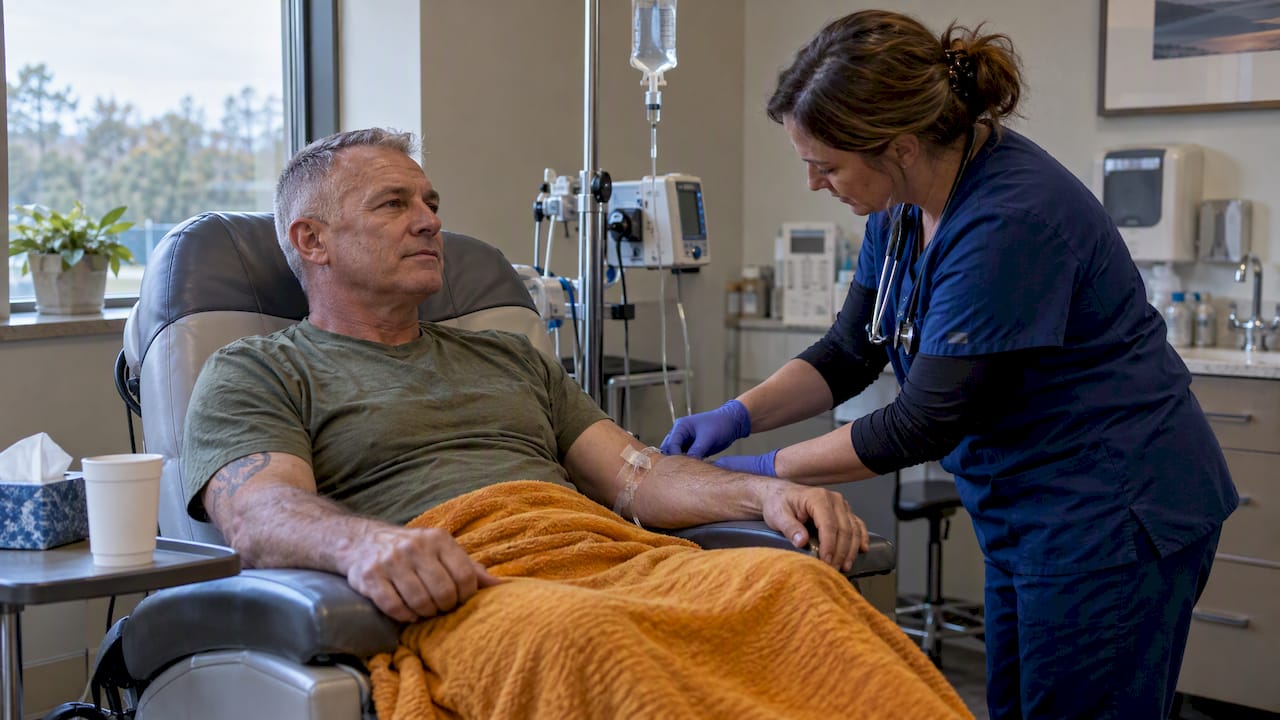
A typical visit follows a defined sequence: intake and medical history review, screening against exclusion criteria, informed consent, a monitored infusion of set duration, and a recovery period before discharge with a driver. Many patients pair infusions with integration coaching to help translate the treatment window into lasting behavioral and therapeutic gains.
Before starting treatment anywhere, veterans should ask a few direct questions:
- Who administers and monitors the infusion, and what is their medical background?
- What is the emergency protocol if blood pressure or heart rate spikes during treatment?
- How often will mood and symptom scores be reassessed?
- Will the clinic coordinate records with my VA or community care provider?
Pro Tip: Ask whether your infusion will include continuous vital sign monitoring for the full session, not just spot checks. Continuous monitoring is the standard a cardiac-trained provider will use.
Intranasal, oral, and other ketamine delivery methods
IV infusion is the method used in VA clinical determinations and most of the controlled research, but it is not the only form available. Intranasal esketamine is FDA-approved specifically for treatment-resistant depression and is delivered under direct clinical supervision, similar in spirit to IV protocols but administered differently. Oral and sublingual ketamine formulations also exist, typically used in lower-intensity maintenance contexts rather than acute induction phases.

For veterans, the practical difference comes down to control and monitoring. IV administration allows a clinician to titrate dose in real time and respond immediately to blood pressure changes or dissociation, which is part of why VA protocols favor it for TRD and severe suicidal ideation. Intranasal and oral routes may offer more flexibility for ongoing maintenance once a patient has established how they respond to treatment, but they still require medical supervision rather than home use. No delivery method changes the underlying exclusion criteria: cardiac, pregnancy, psychiatric, and substance use screening apply regardless of how the medication is administered.
Veterans considering a switch from IV to a maintenance-phase alternative should raise it directly with their treating clinician rather than assuming interchangeability, since dosing equivalence between routes is not one-to-one.
Stigma and ethical questions veterans face with ketamine
Ketamine carries a reputation problem that has little to do with its clinical use. Many veterans associate it with recreational misuse rather than its decades-long history as an FDA-approved anesthetic now used off-label for mood disorders under medical supervision. That gap between perception and clinical reality can delay veterans from even raising the option with a provider.
There is also a fairness question worth naming directly. VA authorization for IV ketamine is narrow, tied to treatment-resistant depression or severe suicidal ideation but not PTSD symptoms alone. A veteran whose primary struggle is intrusive memories or hypervigilance, without qualifying depression severity, may not meet VA criteria even if they suspect ketamine could help. That is not a judgment on the veteran’s suffering, it reflects where the current evidence and policy draw the line.
Clinicians also carry an ethical obligation to avoid overselling rapid relief. Early, dramatic symptom improvement can create pressure, from patients, families, or even providers eager for results, to treat ketamine as more settled than the evidence supports. Responsible care means naming the limits of the research alongside its promise, and treating veterans as partners in that judgment rather than recipients of a fixed protocol.
What ketamine costs outside the VA system
Veterans who pursue ketamine through a private clinic rather than VA or community care should expect to pay out of pocket in most cases, since ketamine for mood disorders is generally considered an off-label use and insurance coverage for infusion therapy varies significantly by plan and provider. Intranasal esketamine, being FDA-approved for treatment-resistant depression specifically, has a somewhat different insurance landscape than IV ketamine infusions, which are more likely to require self-pay or reimbursement requests.
Private clinics typically do not publish flat package prices because treatment plans are built around individual dosing, infusion count, and whether services like integration coaching or complementary infusions are included. The honest answer for any veteran comparing options is to ask a given clinic directly for its current pricing and whether it offers documentation to support an insurance reimbursement claim. Some clinics assist with superbills or paperwork that a veteran can submit to a private insurer, though approval is never guaranteed and depends entirely on the individual plan’s terms.
If cost is the deciding factor, it is worth exhausting VA and Veterans Community Care Program pathways first, since those routes do not carry the same out-of-pocket burden when a veteran meets the clinical criteria for treatment-resistant depression or severe suicidal ideation.
Long-term effectiveness and keeping gains after treatment
The honest state of the evidence is that ketamine’s long-term effectiveness for PTSD specifically has not been established. Most trials measure outcomes over weeks, and the 2024 systematic review that found early symptom improvement also noted that benefits were often short-lived across the trials it examined. That pattern suggests ketamine functions better as a window of opportunity than a durable fix on its own.
Maintenance infusions, spaced out after an initial induction series, are the most common strategy clinics and VA programs use to sustain gains, but spacing and frequency are individualized rather than fixed by protocol. What seems to matter more than infusion count is what happens during the relief window. Patients who use the temporary lift in mood and cognitive flexibility to engage more fully in trauma-focused psychotherapy, rather than relying on ketamine alone, appear to get more lasting value out of treatment, consistent with how VA guidance frames ketamine as an adjunct rather than a stand-alone therapy.
For veterans weighing whether to pursue maintenance dosing, the practical question to bring to a clinician is not just “did symptoms improve,” but “did that improvement translate into better engagement with therapy or daily functioning.” That distinction is where lasting change tends to show up.
A note to veterans weighing hope against caution
Living with PTSD for years while treatments fall short is exhausting, and it is reasonable to want something that works faster than another round of trial-and-error medication. Ketamine’s rapid effects are real for some people, and that matters.
But fast relief is not the same as a lasting fix, and the research is still catching up to the hope surrounding it. Use VA pathways first when you can. Ask your provider pointed questions about whether you meet criteria for treatment-resistant depression, not just whether ketamine “might help.” Loop in people you trust, a clinician, a spouse, a fellow veteran who has been through treatment, before making a decision that affects your care plan.
— Austin Harris, MD
How NeuroRelief can help veterans evaluate ketamine treatment
If you are exploring ketamine after VA or community care options have not fully addressed your symptoms, NeuroRelief Ketamine provides physician-led IV ketamine infusion therapy in a monitored clinical setting, with treatment plans built around your specific history rather than a fixed protocol.

Services may include IV ketamine infusion therapy for mental health and chronic pain conditions, integration and recovery coaching, and complementary infusion therapies as part of a broader recovery approach.
We also help patients understand how ketamine fits alongside psychotherapy and can discuss how your treatment history may factor into insurance reimbursement conversations. If you have already explored VA pathways and want a second clinical opinion, schedule a consultation for PTSD-focused ketamine therapy to review whether you are a candidate.
Sources
For veterans who want to go deeper than this overview, these are the primary documents and reviews behind the guidance above:
- Effectiveness of Ketamine for the Treatment of Post-Traumatic Stress Disorder – A Systematic Review and Meta-Analysis
- VA/DoD Clinical Practice Guideline for Management of Posttraumatic Stress Disorder and Acute Stress Disorder (2023)
- Intravenous Ketamine for Treatment Resistant Depression – Clinical Determinations and Indications (VHA Office of Integrated Veteran Care)
This article is general information, not a substitute for advice from a qualified doctor. Consult a qualified healthcare professional about your own circumstances before acting on anything here.
FAQ
Does the VA cover ketamine therapy for PTSD?
The VA covers IV ketamine specifically for treatment-resistant depression or severe suicidal ideation under defined clinical determination criteria, not for PTSD symptoms alone. A veteran whose primary diagnosis is PTSD may still qualify if they also meet the depression or suicidality criteria.
Is ketamine proven to treat PTSD symptoms?
No, ketamine is not established as a proven PTSD treatment. A 2024 systematic review and meta-analysis found early symptom improvement in some trials, but results varied and benefits were often short-lived, and the VA/DoD guideline rates the evidence for PTSD specifically as weak.
What is the difference between ketamine for depression and ketamine for PTSD?
Ketamine’s clinical authorization through the VA targets treatment-resistant depression and severe suicidal ideation, where evidence for rapid mood improvement is stronger. For PTSD symptoms like intrusive memories or hypervigilance, the evidence is much less consistent, which is why trauma-focused psychotherapies remain the recommended first-line approach.
What therapies does the VA recommend before considering ketamine?
The VA/DoD guideline recommends trauma-focused psychotherapies, Cognitive Processing Therapy, Prolonged Exposure, and EMDR, as first-line PTSD treatments. Ketamine may be considered afterward or alongside these therapies in cases involving severe depression or suicide risk, rather than as a replacement for them.
How do I start the process of asking about ketamine through the VA?
Start by discussing your treatment history and current symptoms, including any PHQ-9 or PCL-5 scores, with your VA mental health provider and asking whether you meet criteria for treatment-resistant depression. If your facility lacks an in-house ketamine program, you can ask about a referral through the Veterans Community Care Program.